The Autumn Budget and your next move in Sevenoaks

If you’re planning a move or own a rental property, the Budget gives us more detail to help you plan ahead. Alongside support for eligible first-time buyers, there are changes for individual landlords and further information for owners of higher-value homes.
Here are the points I would focus on in Sevenoaks and the surrounding villages, and how we can help you work through them.
Stamp duty remains unchanged for home purchases
The Budget has not changed residential purchase stamp duty rates or thresholds in England, including first-time buyer relief. [4] Buyers should continue to budget using the existing rules and have their solicitor confirm the amount due.
For sellers, I would keep the focus on what will help your home compete: a realistic asking price, first class presentation and a marketing strategy that reaches the right buyers. The Budget gives us information to work with, but your moving plans still need to reflect your circumstances.
Individual landlords should revisit their figures
The announced property income tax rates will be 24%, 44% and 49% from 6 April 2027. This is a further two percentage point increase on the rates announced last year. [1] These are personal income tax rates, rather than corporation tax rates for property held in a limited company.
For landlords, I would start with an updated forecast of income and costs. Your accountant can assess the tax position, while we can help review the achievable rent, the property’s presentation and how to reduce avoidable gaps between tenancies. A decision to keep, improve or sell a property should follow that fuller picture.
For Landlords with one or more rental properties individually worth £2m+ you will be liable for the HVCTS (see below) not the tenant.
Further detail for higher value homeowners
The High Value Council Tax Surcharge (HVCTS) for homes in England worth £2 million or more was announced previously and is due from April 2028. This Budget provides further detail on deferrals, discounts and exemptions, alongside an additional premium for properties left empty and unoccupied for at least 12 months. [3]
If your home could fall within scope, understanding the valuation process and the rules relevant to you will help you plan. An estate agency asking price does not itself determine the official valuation for this charge.
Support for first time buyers
The Your First Home scheme will support eligible new-build purchases in England with a 20% government equity loan and a deposit of at least 2.5%. Applications are expected from December 2026, with the first purchases from April. Income limits and local property price caps apply. [2]
For first-time buyers who have been working hard to save a deposit, this is a welcome boost. The scheme could halve the upfront deposit compared with a 95% mortgage, while the government’s equity loan is interest-free for the first five years. A smaller mortgage could also mean lower monthly repayments, making the first years of home ownership more manageable. [2]
If buying your first home has felt a little out of reach, this is a good reason to revisit your options. We can help you explore homes locally and prepare for the scheme’s launch, with eligibility for a particular property confirmed once the local price caps are published.
More support for first home savings
From 29 October 2026, the Lifetime ISA withdrawal charge falls from 25% to 20% for otherwise qualifying first-home purchases above £450,000. This returns more of a buyer’s savings towards their purchase. The charge still recovers the government bonus, while removing the additional penalty on their original contributions. The property price cap itself has not increased. [5]
For example, £10,000 of contributions plus a £2,500 bonus gives a £12,500 balance. The reduced charge leaves £10,000 available towards a qualifying purchase above the cap, compared with £9,375 under the previous charge. That is £625 more for the buyer, assuming no interest or investment gains or losses.
How the First Time Buyer ISA will help
From April 2029, the new First Time Buyer ISA will allow contributions of up to £4,000 a year and offer a 25% government bonus, capped at £20,000 in total, towards an eligible first home costing up to £450,000. The bonus will be paid when the money is used for a qualifying purchase. [6]
That means an extra £1 towards the deposit for every £4 saved, helping buyers build a larger deposit from their own savings. There will be no upper age limit, and savers who need their money for another purpose will not face the Lifetime ISA’s withdrawal penalty: the bonus is added only for a qualifying home purchase. Existing Lifetime ISA holders can continue using their accounts. [5]
How the bonus can build your deposit
These examples show cumulative savings built up over several tax years, subject to the £4,000 annual contribution limit. They assume no interest or investment growth. [6]
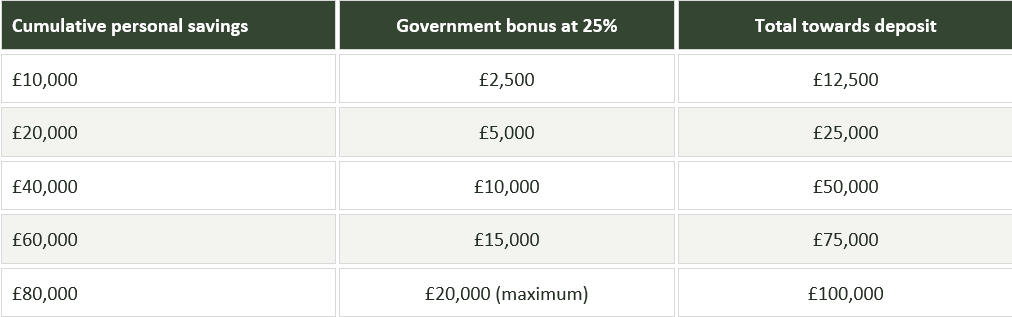
For example, £20,000 saved over five tax years at the maximum annual contribution could become £25,000 towards a qualifying purchase once the bonus is paid. It gives regular saving an extra reward and could help buyers reach their deposit target sooner.
What a smaller deposit could mean
For a couple buying an eligible £450,000 new-build home, the Your First Home scheme could reduce the deposit from £22,500 to £11,250. The comparison below illustrates the potential difference, assuming a 30-year repayment mortgage at 5% throughout. The purchase must fall within the local scheme price cap. [2]
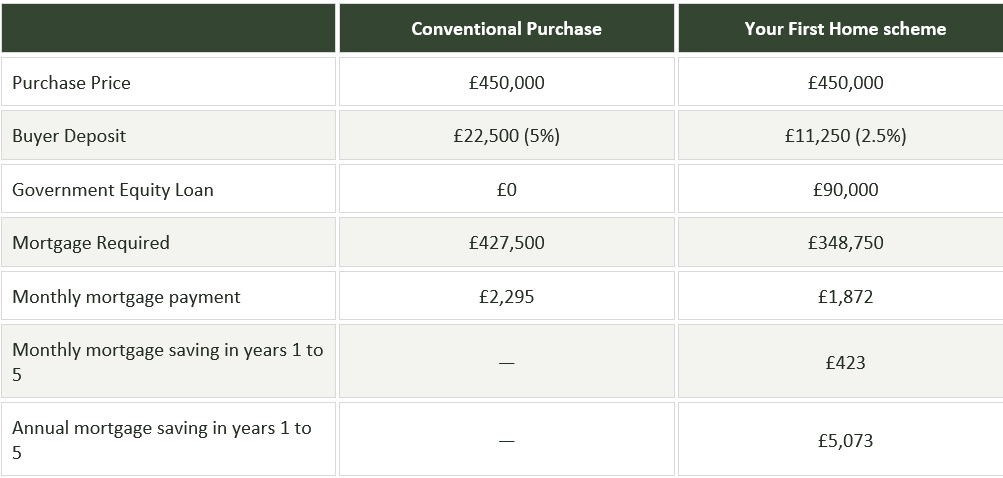
Rounded figures are illustrative and exclude fees and other buying costs. The equity loan must be repaid, normally as a share of the home’s value. Interest becomes payable after year five, so the figures above are not a lifetime saving or a mortgage offer.
How two Lifetime ISAs could contribute
If each buyer has saved £4,500 into an eligible Lifetime ISA over at least two tax years, their combined £9,000 of contributions would attract £2,250 in bonuses. Ignoring interest or investment changes, that creates an £11,250 deposit fund. [7]
That matches 2.5% of a £450,000 home. Use alongside Your First Home would depend on the final scheme rules, the local price cap and lender approval. Each LISA must meet the 12-month holding rule, and buyers would also need funds for legal fees and other purchase costs. [2,7]
POWELLS. view
A well-planned move remains something to look forward to. Finding a home that suits your family, moving closer to the people you love or choosing a different pace of life are all good reasons to explore your options.
There are encouraging steps for eligible first-time buyers, and those affected by future tax changes have time to understand the detail and prepare. The costs deserve careful attention, alongside the opportunities a move might bring.
At POWELLS., we remain positive about the opportunities for well-prepared buyers and sellers across Sevenoaks and the surrounding villages. A considered asking price, thoughtful presentation and a clear marketing strategy can help you move forward with confidence. For landlords, reviewing a property’s performance now can help identify practical improvements and support longer-term plans.
Our role is to make the next steps feel manageable. We’ll help you understand your options, work through the questions and put a plan in place at a pace that feels right for you.
If you would like to talk through your plans, call POWELLS. on 01732 900 550 or pop into our office for a coffee and a chat.
Property measures summarised as announced on 28 October 2026. Future measures remain subject to legislation and scheme rules. Ask your accountant or financial adviser about your personal tax or borrowing position.
Official sources
[3] High Value Council Tax Surcharge
[4] Stamp duty rates and allowances
[5] Budget 2026 including first home savings
[6] HMRC First Time Buyer ISA design and contribution limits
[7] Lifetime ISA contributions and qualifying home purchases